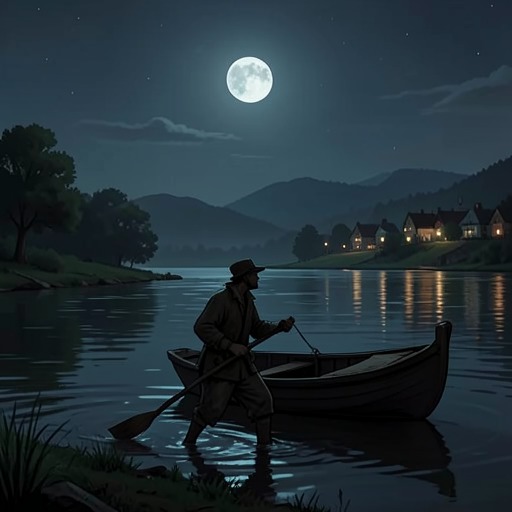
San Martín
The ForgivenSan Martín is the nearby Spanish locality that marks the boundary of Driss’s restricted life at the Bloodworths’ property. The town itself is only briefly glimpsed, but its gate, road, and surrounding countryside shape his hidden work, his exposure to immigration enforcement, and his plans to leave for Paris.
Setting and the Bloodworths’ Property
The Bloodworths had lived in Spain for eleven years and had built gardens around their home, where Driss worked under Roger Bloodworth’s instruction. Their property was close enough to San Martín for the town to be a possible destination, yet Driss was forbidden to walk down to the gate, follow the road, or go into the town. The restrictions kept him on the grounds and out of sight of police searching for undocumented workers in farms and greenhouses. The narrative provides little description of San Martín itself; its importance lies chiefly in the limits imposed around it.
Summer Work and Concealment
In August, European visitors came to the Bloodworths’ property, including French couples and families from London and Dublin; some kept yachts at Sotogrande for the summer. Roger arranged Driss’s routine to prevent the guests from seeing him before he was dressed for garden work. Driss made coffee in an outbuilding while visitors moved between their rooms and the pool, then went out in a straw hat and gardening jacket with pruning shears and a pail. Roger taught him the names of shrubs and flowers and the careful work of tending them. The cultivated grounds were therefore both a workplace and a screen: Driss could remain there only by staying inconspicuous to the visitors and avoiding San Martín.
Seasonal Change and the Paris Plan
When the November rains came, tourists dwindled, part of the house was boarded up, and the Bloodworths settled into winter routines on the heated ground floor. The gardens became dewy and misted, while Driss grew increasingly impatient and began thinking persistently about Paris. He asked Roger about the roads leading there: they crossed the mountains into France and cost a great deal to use. Driss considered hitching a ride with Moroccans who drove north from Algeciras. The Bloodworths tried to dissuade him from leaving, but his aim was more practical than their sympathy for migrants: he wanted to reach Paris without the police finding him.
The Road and Driss’s Account
After leaving the Bloodworths’ home, Driss went down with a bag of cash and clothes to the road past San Martín and returned to the gas station where he said his journey had begun. There he approached Moroccan families heading for Paris and offered to pay their fuel in exchange for a place in a car. He described traveling with a young family whose grocery store was in Marx Dormoy. The account is presented as a story Driss tells Ismael, not as an independently confirmed journey: Driss is pleased by its effect and believes Ismael has accepted it, while Ismael suspects that Driss never went to France and had instead stayed with the Bloodworths. San Martín thus anchors both Driss’s documented confinement and the uncertain tale he tells about escape.